


★ The Breakthrough
One Man, One Village, One Extraordinary Journey to the World Stage


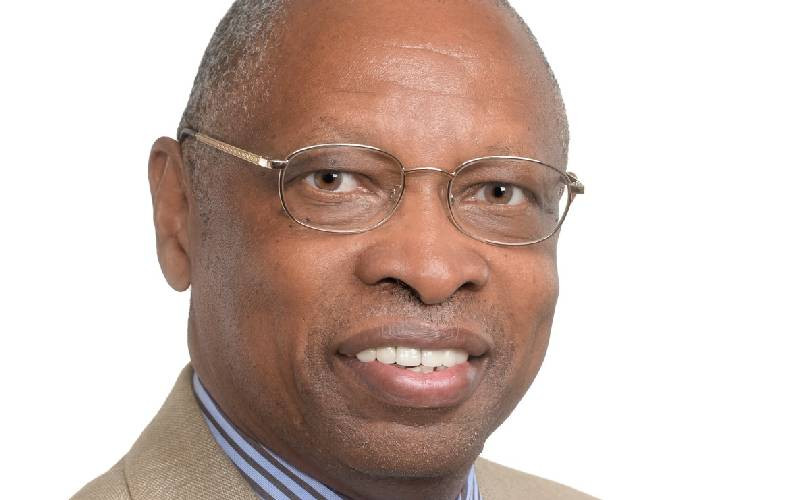
Now, Prof. Njoroge has added his most Africa-facing achievement yet. He has been honoured with the 2026 Greater Manchester Cancer Award — alongside a UK team led by Professor Robert Bristow of the University of Manchester and The Christie NHS Foundation Trust — for pioneering work to transform the early detection of oesophageal cancer in Kenya. The award carries Sh446 million (£2.6 million) in funding from the UK’s National Institute for Health and Care Research (NIHR).
“The unique collaboration between Kenya and the United Kingdom in this oesophageal cancer study will go a long way in establishing ways that would tilt the balance, whereby oesophageal cancer could be detected at the potentially curative stages 1 and 2 rather than the late stages 3 and 4. This will be a game changer.”
— Prof. F. George Njoroge, KUTRRH
★ Background
Understanding Oesophageal Cancer: Kenya’s Deadliest Killer
Oesophageal cancer develops in the muscular tube connecting the throat to the stomach. In Kenya it is the third most commonly diagnosed cancer — but it holds a far more chilling distinction: it has the highest mortality rate of all cancers in the country, claiming approximately 4,400 lives every year.
Almost no one diagnosed with oesophageal cancer in Kenya survives. Not because it cannot be treated — but because it is almost never caught in time.
The cancer is concentrated in Central and Western Kenya — counties like Kisii, Meru, Nakuru, Nyeri, and Kiambu — where dietary habits including consumption of very hot drinks and traditional fermented porridge, combined with tobacco and alcohol use, elevate risk significantly.
The tragedy is structural: surgery, chemotherapy, and radiotherapy can produce good outcomes — but only at Stage 1 or 2. The overwhelming majority of Kenyan patients present at Stage 3 or 4, when curative treatment is no longer possible. By the time symptoms become unmistakable — difficulty swallowing, rapid weight loss, persistent chest pain — the window has already closed.
★ The Research
The Hub-and-Spoke Model: Bringing Early Detection to Every Corner of Kenya
The Njoroge–Bristow collaboration has built something Kenya’s cancer landscape has never had: a coordinated, community-rooted early detection network stretching from Nairobi into the counties where the disease is most prevalent. The project operates through a hub-and-spoke system — KUTRRH in Nairobi as the central specialist hub, with five high-risk counties as spokes:
Mobile detection units travel across the country to bring screening directly to communities. Rapid pathology services and new genomic capacity mean suspicious cases are processed far faster than ever before. A digital transformation of cancer data ties the entire network together, giving clinicians real-time intelligence on disease spread and patient outcomes.
The three-year initiative also involves the National Cancer Institute of Kenya, Kenyatta University, Mount Kenya University, Jomo Kenyatta University, KEMRI, and KENCO — the most comprehensive Kenya-led cancer research collaboration the country has ever seen. In February 2026, the team shared encouraging early findings at a national stakeholders forum.
★ The Bigger Picture
What This Means for Africa — and the Future of All Cancer
Prof. Njoroge’s story is not just inspirational. It is a proof of concept: when Africa invests in its scientists, and when African scientists lead, world-class solutions to African problems emerge. The oesophageal cancer breakthrough carries a deeper promise for every cancer type.
The community engagement, mobile screening, rapid pathology, and genomic profiling systems being built for oesophageal cancer in Kenya are not just for one cancer. They are the scaffolding for a new era of African oncology — adaptable to cervical cancer, breast cancer, prostate cancer, and beyond.
Every system built to catch one cancer early is a system that can save lives from many cancers. Prof. Njoroge’s work is not just a breakthrough — it is a blueprint for the Africa that is coming.
History tells us that today’s incremental scientific advance is tomorrow’s life-saving cure. Njoroge spent 15 years pursuing a molecule that became Victrelis, saving thousands from hepatitis C. He pursued a compound that seemed to fail in cancer trials — only for it to resurface as Zokinvy, now saving children dying of progeria. Science does not always move in straight lines. But it works. And it is working here, on African soil.
★ The Crisis Behind the Story
Africa’s Broader Cancer Emergency
To understand why Prof. Njoroge’s work matters, you need to understand what Africa is up against. With over 820,000 new cancer cases and 550,000 deaths in sub-Saharan Africa in 2022 alone, and projections pointing to the steepest rise in cancer mortality by 2040, the continent faces an epidemic — with 24% of global disease burden and only 3% of the world’s healthcare workers.
The leading cause of cancer death in women in sub-Saharan Africa. Caused primarily by HPV, it is almost entirely preventable — but vaccines and routine screening remain out of reach for millions. Africa’s death rate is 2.5× the global average.
The most commonly diagnosed cancer in women across 26 of 48 sub-Saharan countries. Without accessible screening, most women present at Stage III or IV. The survival gap between Africa and Europe is structural, not biological.
The top cancer among men in 40 of 48 sub-Saharan countries. Black African men carry some of the world’s highest genetic risk, yet the disparity is chronically underfunded. Africa’s mortality is 2.4× the global average.
★ The Call
What Must Change Now
If One Man from Kiambu
Can Change the World —
So Can Africa.
George Njoroge was raised by a grandmother in a village outside Nairobi. He had no obvious path to the American Chemical Society Hall of Fame, to 100 US patents, to FDA-approved drugs, to a £2.6 million global cancer award.
And yet. Here we are. Every cancer that one day has a cure will have been preceded by a story like his — someone who refused to accept that a disease had the final word.
The conversation — and the cure — starts now.
Sources: The Standard Media · The Star Kenya · The Kenya Times · KUTRRH.go.ke · University of Manchester · GLOBOCAN 2022 · WHO Regional Office for Africa · Frontiers in Oncology 2025 · Lancet Oncology Commission


