
The Mental Health Gap in Kenya: Why Communities Must Be Part of the Response
Kenya’s mental health treatment gap cannot be addressed by professionals alone. Families, schools, workplaces, churches and communities also need the knowledge to recognise distress, respond safely and connect people with appropriate care.
Mental health care in Kenya is changing. Conversations about depression, anxiety, trauma, substance use, grief and emotional wellbeing are becoming more visible. Government policy is increasingly emphasising integration of mental health into primary care, while digital services are creating new routes to support. Yet one challenge remains substantial: many people who need mental health support still do not receive it.
In September 2024, Kenya’s Ministry of Health launched the country’s first Clinical Guidelines for the Management of Common Mental Disorders alongside a Kenya-adapted version of the World Health Organization’s Mental Health Gap Action Programme, or mhGAP. The Ministry said these interventions were intended to help address an estimated 75% mental health treatment gap.
The challenge is therefore not only whether mental health problems exist. It is whether people recognise when something is wrong, know how to respond, understand where their role ends, and can connect someone to appropriate care.
“Kenya does not only need more mental health professionals. We also need communities that know how to recognise distress, respond appropriately and connect people with help.” Convo Africa
Closing the gap requires psychologists, psychiatrists, counsellors, social workers, primary-care teams, better financing, clear referral pathways and stronger services. But professionals cannot do it alone. Mental health also happens where people live, learn, worship, work and belong.
What does the mental health treatment gap actually mean?
The treatment gap describes the difference between people who need appropriate mental healthcare and those who receive it. That gap is not caused by one factor. A person may not recognise their symptoms, may fear stigma, may not know where to seek help, may face cost or distance barriers, or may first encounter someone who does not recognise the need for referral.
This is why closing the mental health gap cannot begin only at the door of a psychiatric clinic. It must also involve mental health literacy, early recognition, appropriate first-line support and clear pathways into professional care.
A stronger community pathway
1. Recognise
Notice significant distress, changes in functioning, safety concerns or signs that someone may need more support.
2. Respond
Listen respectfully, reduce immediate pressure, support practical needs and avoid judgement, interrogation or amateur diagnosis.
3. Refer / Link
Connect the person with trusted people, health services, a qualified therapist, urgent care or other appropriate resources.
Kenya is already moving towards care closer to communities
WHO’s mhGAP is designed to help countries scale up services for mental, neurological and substance-use conditions in non-specialist health settings. Kenya’s adapted programme reflects a broader direction towards improving identification, management and referral closer to where people already seek care.
That policy direction is important, but there is another layer below formal health services: the community itself.
Before someone reaches a therapist, who do they talk to?
Consider a young man who has been struggling emotionally for months. Who notices first? It may be his friend, wife, pastor, employer, mother, youth leader or Community Health Promoter.
A teenager facing bullying may first withdraw at school. A mother experiencing grief may first speak with a women’s group leader. A person overwhelmed by financial pressure may first confide in a colleague. Someone beginning to struggle with alcohol may first be noticed by family.
People’s lives happen before, between and outside appointments. That is why communities matter.
“The goal is not to turn communities into therapists. It is to help communities become better at recognising, responding and referring.” Convo Africa community mental health approach
Where Psychological First Aid fits
The World Health Organization describes Psychological First Aid (PFA) as humane, supportive and practical help for people affected by serious crisis events, delivered in ways that respect their dignity, culture and abilities. PFA is not psychotherapy, counselling or diagnosis.
Its core action principles are commonly summarised as LOOK, LISTEN and LINK.
LOOK
Check safety, urgent needs and signs of serious distress. Notice what is happening before rushing to act.
LISTEN
Approach respectfully. Understand concerns and needs without pressuring someone to tell their story.
LINK
Connect the person with practical help, accurate information, loved ones, services and professional care where appropriate.
If you are new to PFA, begin with our cornerstone guide: Psychological First Aid: The Everyday Life Skill We Cannot Afford to Ignore.
You can also read the second article in this series: Why Psychological First Aid Matters: 7 Benefits for Everyday Life.
Learn Psychological First Aid
Convo Africa Academy’s online PFA course helps ordinary people and professionals learn practical skills for recognising distress, responding compassionately, maintaining boundaries and connecting people with further support.
Community mental health in practice: what Convo Africa learned in Ngaru
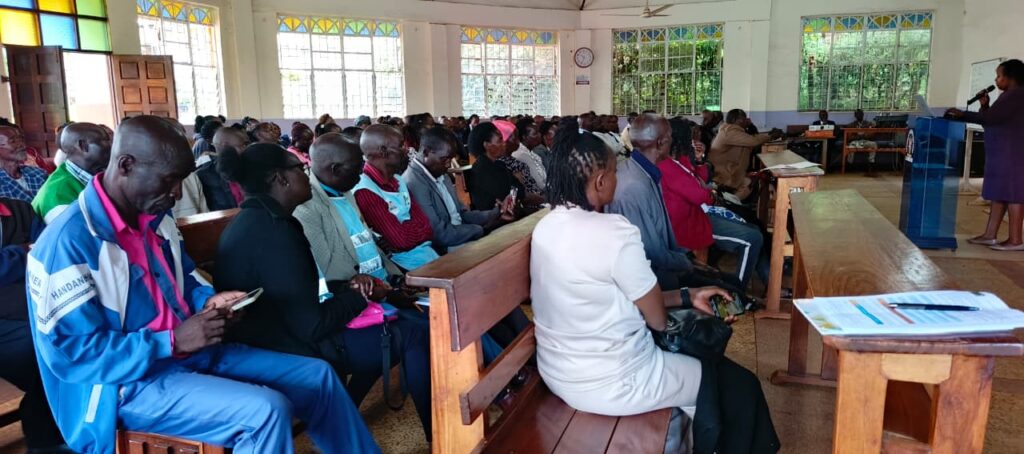
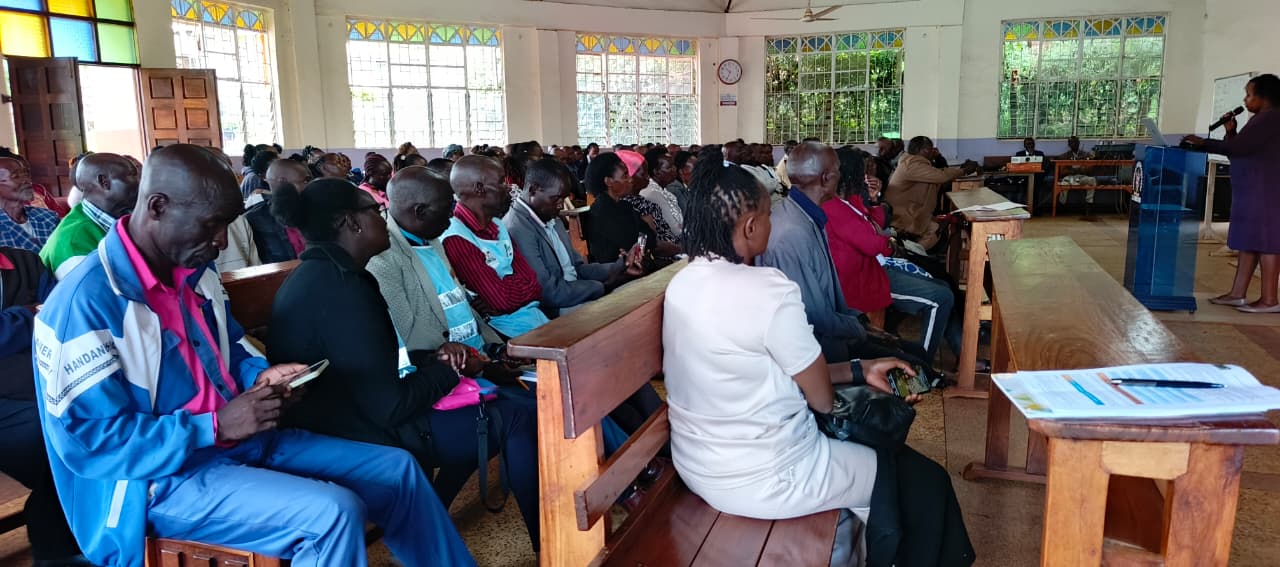
For Convo Africa, community mental health is not only a theoretical position. In May 2026, through the Healing is Possible (HiP) initiative, more than 150 community leaders gathered in Ngaru Location, Kerugoya, for a dedicated community mental health training under the theme Turning Awareness into Action.
Participants included village elders, youth patrons, women’s group leaders, church leaders, school heads and local administrators. Representatives of the Kenya Police Service also attended. These are precisely the people communities often turn to first during conflict, grief, substance-use problems, family difficulties and emotional distress.
The training covered mental health literacy, recognising distress, substance use, stigma, leadership and pathways towards professional support. The aim was not to turn community leaders into therapists. It was to give them better language, greater confidence and a clearer understanding of when and how to connect someone with further help.
“When you create the right space, communities do not shy away from these conversations. They lean in.” Healing is Possible community training, Ngaru
Read the full story of the Ngaru community mental health training.
Why trusted community leaders matter
Community leaders possess something health systems cannot simply manufacture: trust and proximity. They understand local language, family structures, beliefs, community relationships and practical realities.
But trust without appropriate mental health knowledge can also create risk. Distress may be moralised. Serious symptoms may be dismissed. Substance use may be approached only through shame. Confidentiality may be overlooked. Someone needing professional care may never be referred.
That is why community capacity building should focus on both compassion and boundaries.
Community Health Promoters, schools, churches and workplaces are part of the pathway
Mental health support cannot be confined to specialist rooms. A teacher may notice a learner withdrawing long before a therapist does. A Community Health Promoter may see changes in a household. A pastor may be approached after bereavement or marital breakdown. A manager may be the first to recognise that an employee is struggling after a traumatic event.
None of these roles should substitute for clinical care. But each can become a stronger bridge towards care.
From community recognition to professional support
Awareness becomes far more valuable when there is somewhere to refer a person. This is where access to qualified mental health professionals matters.
For people searching in Kenya for therapy online, online counselling, online counseling, therapy services online, a psychologist online, a virtual therapist or confidential mental health support in Kenya, digital care can provide another route into professional support.
Need professional support?
Convo E-Therapy connects people with licensed, vetted mental health professionals for confidential online sessions. Browse therapist profiles by expertise, availability and fee, then choose a professional who fits your needs.
Online therapy is not the correct level of care for every situation, and urgent safety concerns require urgent or emergency support. But for many people seeking counselling services online, anxiety therapy, depression support, grief counselling, trauma therapy or relationship counselling, remote sessions can reduce geographical and logistical barriers.
Knowledge should lead to a next step
Convo Africa’s Mental Health Knowledge Hub is designed to help people understand common mental health concerns in clear language and connect that knowledge with practical next steps.
Explore the Convo Mental Health Knowledge Hub
Use clinically grounded guides to understand common patterns, then choose an appropriate route towards screening, professional support or further learning.
Kenya needs an ecosystem, not a single intervention
There is no single solution to the mental health treatment gap. Not PFA alone. Not therapy alone. Not awareness campaigns, technology, specialists or policy in isolation.
The mental health support ecosystem
A resilient system connects multiple layers: prevention and mental health literacy, informed communities, Psychological First Aid where appropriate, primary healthcare, professional therapy and specialist services, strong referral pathways, digital access, policy, financing and workforce development.
Communities are not outside this ecosystem. They are part of it.
Awareness must eventually become capability
For years, mental health advocacy has rightly encouraged people to talk, challenge stigma and seek help. The next stage is capability.
- Can a parent recognise when a child’s distress needs more attention?
- Can a teacher respond without shaming or attempting diagnosis?
- Can a manager have a supportive conversation while respecting professional boundaries?
- Can a faith leader recognise when pastoral support should be complemented by professional care?
- Can a community leader identify a referral pathway?
- Can someone searching for therapy services online find a qualified professional and understand their next step?
Mental health awareness tells a community: “Mental health matters.”
Mental health literacy and PFA begin answering: “So what do we do?”
Two practical next steps
If you want to become better prepared to support people experiencing distress, learn Psychological First Aid. If you are personally struggling and need professional support, connect with a qualified therapist.
From conversations to action
At Convo Africa, we believe change can begin when people are able to have meaningful conversations about subjects that are often avoided. Mental health is one of those conversations. But conversation should lead somewhere: towards understanding, reduced stigma, practical skills, appropriate referral and professional care when needed.
Our experience in Ngaru demonstrated the appetite for this work. More than 150 community leaders gathered because mental health was already part of the lives of the people they serve. The opportunity is to equip more families, leaders, schools, workplaces and communities to respond well.
Stronger mental health systems need professionals. They also need informed communities that know when and how to connect people with those professionals.
Frequently asked questions
What is the mental health treatment gap in Kenya?
Kenya’s Ministry of Health stated in 2024 that the country’s adapted mhGAP programme was intended to help address an estimated 75% treatment gap. The term broadly describes the difference between people who need appropriate mental healthcare and those who receive it.
Can Psychological First Aid close Kenya’s mental health treatment gap?
No single intervention can close the gap. PFA is not treatment for mental illness. It can contribute to a wider response by helping trained helpers provide humane initial support, understand boundaries and connect distressed people with appropriate services.
What is the role of communities in mental health?
Communities can improve mental health literacy, reduce stigma, recognise distress, provide appropriate social and practical support and help people reach professional or medical services when needed.
Is Psychological First Aid the same as counselling?
No. Psychological First Aid is humane, supportive and practical initial assistance after serious distressing events. Counselling and psychotherapy involve different professional competencies, relationships and interventions.
What is mhGAP?
The WHO Mental Health Gap Action Programme supports countries in expanding care for mental, neurological and substance-use conditions, particularly through non-specialist health settings. Kenya launched an adapted mhGAP programme in 2024.
Who should learn Psychological First Aid in Kenya?
PFA can be valuable for healthcare and community workers, teachers, humanitarian workers, social workers, faith and community leaders, first responders, youth workers, managers and other people likely to encounter individuals experiencing serious distress.
Where can I find online therapy in Kenya?
Convo E-Therapy provides an online directory of licensed and vetted mental health professionals. Clients can review therapist profiles, areas of expertise, availability and fees before choosing a confidential online session.
Where can I learn Psychological First Aid online?
Convo Africa Academy offers an online Psychological First Aid course designed to teach practical skills for recognising distress, responding compassionately, maintaining appropriate boundaries and connecting people with further support.
Sources and further reading
- Kenya Ministry of Health: Clinical guidelines for common mental disorders and Kenya-adapted mhGAP.
- World Health Organization: Psychological First Aid — Guide for Field Workers.
- World Health Organization: Mental Health Gap Action Programme (mhGAP).
- WHO mhGAP Guideline for mental, neurological and substance-use disorders.
- Convo Africa: Over 150 Community Leaders Gather for Mental Health Training in Ngaru.
This article is educational and does not replace individual diagnosis, medical advice, psychotherapy, psychiatric assessment or emergency care.