

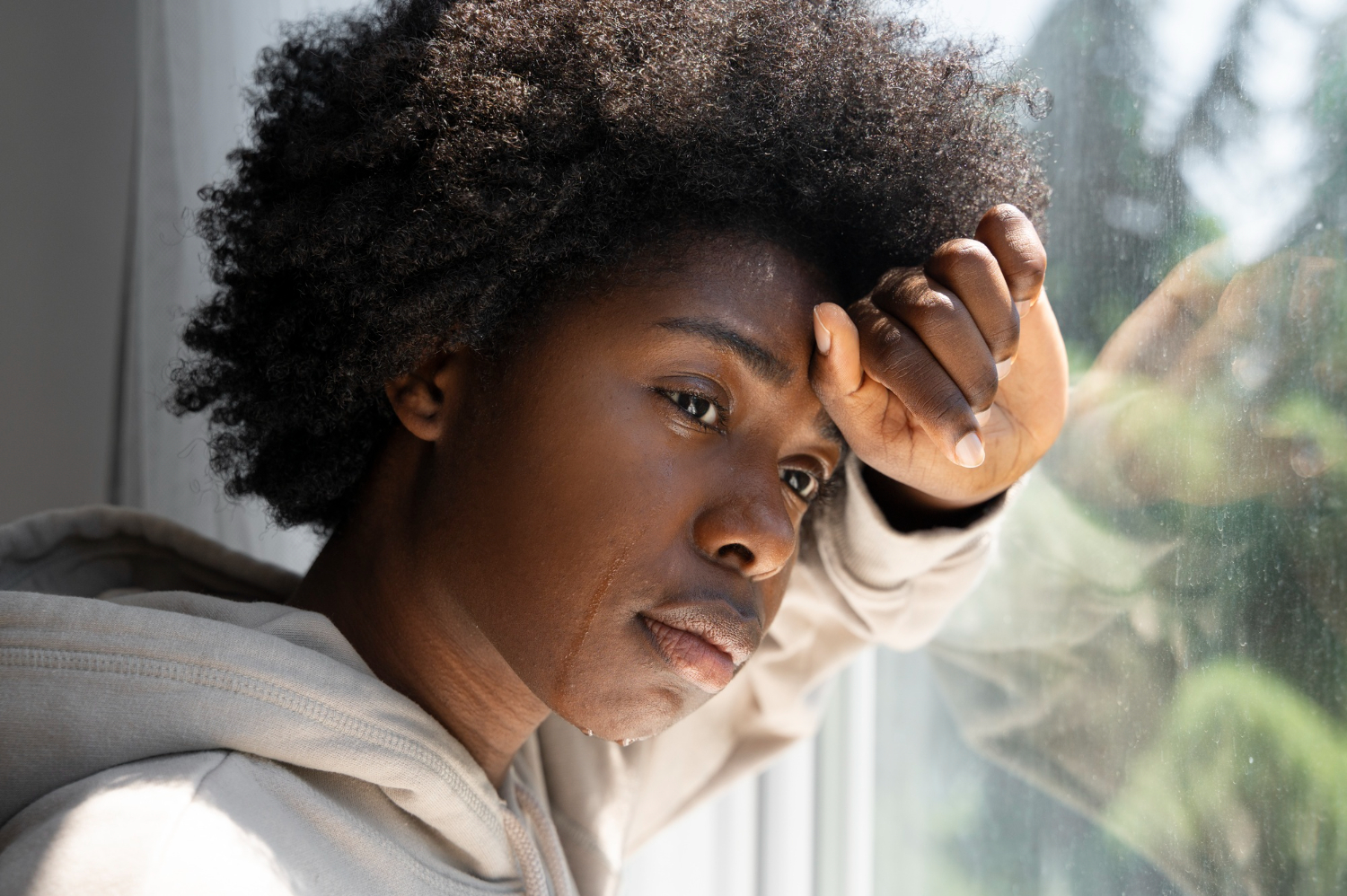

I recently listened to the documentary Mental Health and Resilience – The Secrets of Inner Strength by DW (Deutsche Welle), and it contained such profound insights on mental health that I felt compelled to share them.
We live in times that test our very foundations. As crises multiply across the globe, from economic instability to climate emergencies – our mental fortitude is being strained like never before. Recent studies reveal a sobering truth: over one billion people now suffer from stress-related illnesses, a number climbing steadily year after year. Yet within this troubling statistic lies a fascinating paradox. When faced with identical tragedies, the loss of a child, the collapse of a career, the trauma of violence, why do some individuals crumble while others not only endure but eventually thrive?
The answer lies in resilience – that mysterious alchemy of mind and spirit that allows humans to bend without breaking. For decades, scientists dismissed resilience as either an inborn trait or simple luck. But groundbreaking research is now revealing it to be something far more profound, a dynamic process we can understand and cultivate.
The Anatomy of Resilience
In laboratories across Europe, neuroscientists are mapping the biological foundations of resilience. At Germany’s Mainz Resilience Center, Professor Raffael Kalisch makes a compelling discovery: resilience isn’t about avoiding stress, but about how we interpret it.
“Two people can experience identical hardships,” Kalisch explains. “The resilient person doesn’t see less pain – they maintain an unconscious belief that they’ll find a way through.” His brain scans show this mindset actually alters neural pathways, creating what he calls “stress-resistant thinking patterns.”
This explains the remarkable case of Boris Cyrulnik, the French psychiatrist who survived unimaginable childhood trauma during the Holocaust. “They told me I was doomed,” Cyrulnik recalls, his voice still carrying echoes of the four-year-old who lost his entire family to Auschwitz. “But something in me refused that narrative.” That refusal – that stubborn rewriting of destiny, would later form the basis of his pioneering resilience research.
The Genetic Dance
Beneath these psychological processes lies an even more fundamental layer: our DNA. At Munich’s Max Planck Institute, Elisabeth Binder’s team has identified specific “stress genes” that act like emotional thermostats. The FKBP5 gene, for instance, regulates how quickly we recover from cortisol spikes. Some variants leave individuals drowning in stress hormones for hours after a minor setback.
But here’s the revolutionary insight: genes aren’t fate. “They’re more like musical instruments,” Binder explains. “The environment determines what music they play.” Positive experiences – loving relationships, meaningful work, therapeutic practices – can effectively mute harmful genetic expressions.

This epigenetic phenomenon was vividly demonstrated in an unusual animal study. Researchers exposed mice to repeated stress, then observed a fascinating divergence. Some became timid, avoiding any risk. Others remained curiously exploratory. The difference? The resilient mice had learned to distinguish true threats from false alarms – a skill that translated neurologically into better stress regulation.
The future belongs not to those who avoid storms, but to those who learn to dance in the rain – and perhaps help others find their rhythm too.
The Crucible of Childhood
Perhaps no discovery carries more societal implications than the primacy of early childhood. From pregnancy through the first two years, the brain shows extraordinary plasticity – for better or worse.
Cyrulnik’s research reveals how maternal stress hormones can cross the placental barrier, potentially “pre-programming” infants for anxiety. Conversely, secure attachments act as psychological vaccines. “A child who knows they’re loved develops an inner voice that says, ‘I matter,'” Cyrulnik notes. “That becomes their armor for life.”
Modern interventions are putting this science into practice. France’s “First 1,000 Days” program, inspired by Cyrulnik’s work, provides comprehensive support to at-risk families. Early results show dramatic reductions in childhood emotional disorders.
The Resilience Paradox
In our achievement-obsessed culture, resilience is often misconstrued as relentless productivity. Psychologist Michèle Wessa offers an important correction: “True resilience isn’t about enduring more stress, but knowing when to say ‘enough.'”
Her experiments demonstrate how easily we can fall into “learned helplessness” – the elephant still tethered by childhood chains. But the opposite phenomenon also exists. Small victories create neural pathways of empowerment. Each time we choose action over passivity, we reinforce our capacity to cope.
The Alchemy of Meaning
Perhaps the most profound insights come from those who’ve endured the unendurable. Take Georg Ballmann and Céline Wilke, who lost their teenage sons in a senseless tragedy. Their grief was oceanic, yet they refused to drown. Instead, they founded “Faustlos” (Without Fists), a violence prevention program that’s reached thousands of children.
“There’s no ‘getting over’ such loss,” Wilke shares quietly. “But you learn to carry it differently. The weight becomes part of you, but not all of you.” This subtle distinction captures resilience’s essence – not the absence of pain, but the expansion of self to encompass it.
Cultivating Unshakable Ground
The science offers practical wisdom for daily living:
- Reframe Your Narrative. Like Cyrulnik, challenge catastrophic thinking. Ask: “What’s another way to see this?”
- Build Stress Intelligence. Practice distinguishing real threats from false alarms. Breathe before reacting.
- Curate Your Microbiome. Not just gut bacteria – the emotional “flora” of relationships, work, and environment.
- Find Your “Faustlos”. Transform pain into purpose, however small the gesture.
As the research makes clear, resilience isn’t a gift bestowed at birth but a garden tended across a lifetime. In our fractured world, this may be the most vital knowledge we can cultivate – that within each of us lies an unshakable core, waiting to be discovered.
“The oak fought the wind and was broken, the willow bent when it must and survived.”
– Robert Jordan
Watch the Documentary here


Pretty insightful,storms are a constant reality,how we face and handle them defines our strength